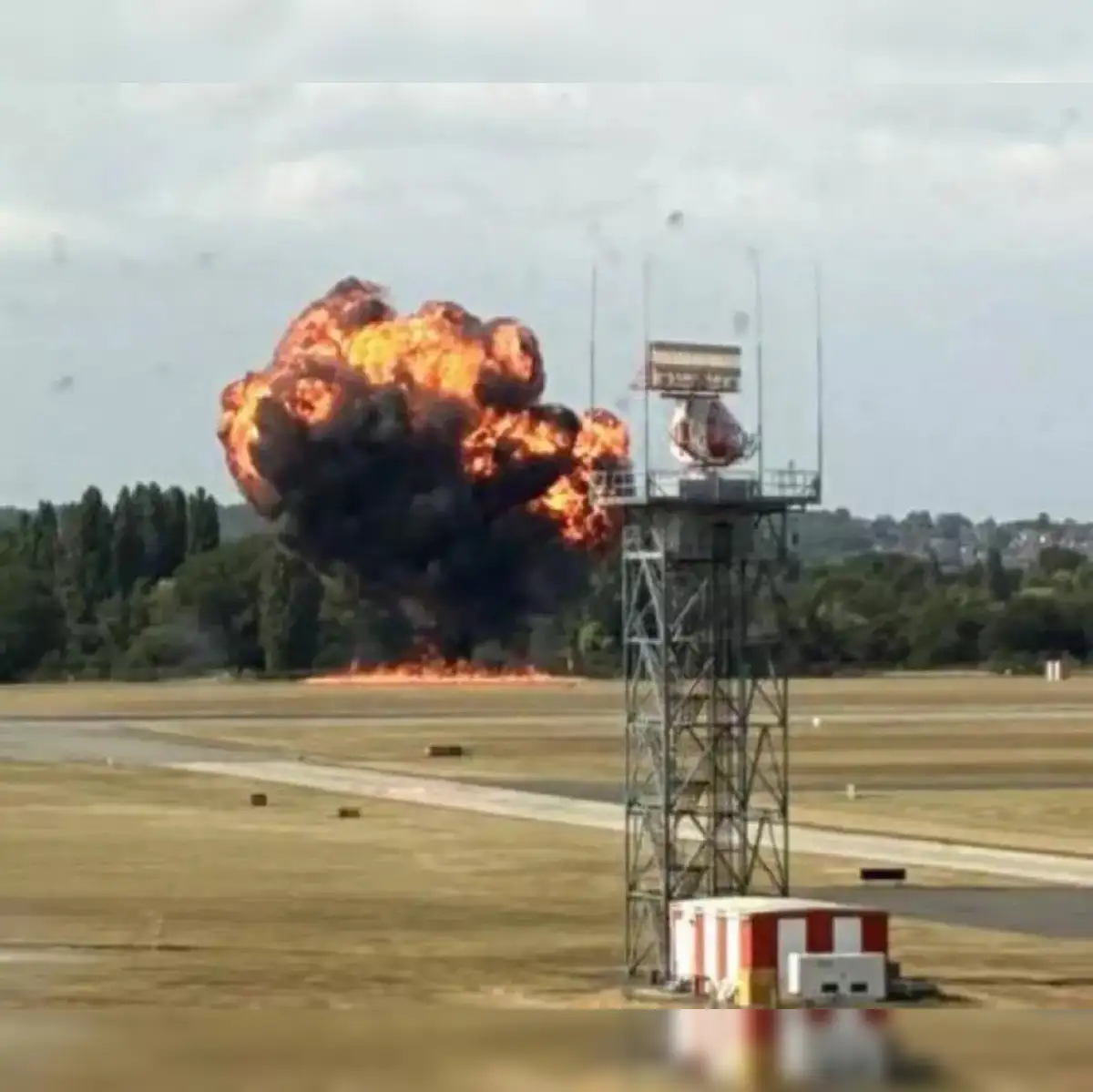
The Southend Airport plane crash sent shockwaves across Essex and the aviation world after a Beechcraft B200 aircraft burst into flames seconds after take-off. The chilling scene unfolded on July 13, 2025, around 4 PM, when the medical aircraft flipped upside down, crashed, and exploded into a fiery blaze visible for miles. Emergency services were on the scene within minutes, but the outcome was already devastating. The incident has raised urgent questions about aircraft safety and emergency preparedness.
The Crash and Its Aftermath
The aircraft involved was a Beechcraft B200 Super King Air, a twin-turboprop model widely used for medical evacuations and short-range charters. Operated by Dutch firm Zeusch Aviation, the plane had completed a series of flights through Europe before departing Southend Airport for its final journey back to Lelystad in the Netherlands. Tragically, it crashed almost immediately after takeoff, flipping mid-air and nose-diving into the ground. Eyewitnesses reported a massive explosion and a fireball that followed the impact. Emergency personnel, including fire crews, ambulances, and police units, were dispatched within minutes and sealed off the area.
The airport was quickly shut down, with all incoming and outgoing flights suspended indefinitely. Authorities evacuated nearby areas including a golf course and rugby club to ensure public safety. The crash caused significant disruption, and several EasyJet and domestic flights were cancelled or delayed as a result.
Read about the recent Air India crash report analysis
Key Details at a Glance
-
Aircraft Model: Beechcraft B200 Super King Air
-
Operator: Zeusch Aviation (Netherlands-based medevac specialist)
-
Time of Crash: 4 PM BST, July 13, 2025
-
Location: Southend Airport, Essex, United Kingdom
-
Passengers on Board: Estimated four (two crew, two passengers)
-
Status of Victims: All feared dead (unofficial)
-
Emergency Response: Over 10 units including fire trucks, ambulances, and air support
-
Airport Status: Closed until further notice
Investigation and Possible Causes
The exact cause of the Southend Airport plane crash is currently under investigation by the UK’s Air Accidents Investigation Branch (AAIB). Preliminary reports and eyewitness accounts suggest a mechanical failure or critical loss of control shortly after take-off. The aircraft’s sharp banking maneuver followed by inversion and nose-first crash points to a possible stall or power-related issue. Authorities have recovered the wreckage and are reviewing flight data and cockpit recordings to understand what went wrong.
At this stage, officials have not ruled out pilot error, environmental factors, or equipment malfunction. Zeusch Aviation is cooperating fully with investigators and has temporarily grounded similar flights until more is known. The crash has renewed scrutiny on the safety of smaller aircraft used in medevac and charter operations, especially given their increasing use in time-sensitive missions like organ transport and emergency evacuations.
Broader Impact and Reactions
The Southend Airport plane crash has sent ripples through the UK’s aviation sector, with airport authorities, aviation safety boards, and the general public calling for greater oversight. Zeusch Aviation, though relatively small, plays a critical role in the European medevac network, and its operations are being reassessed for safety compliance. International travel authorities are monitoring the case closely, and it is expected that safety regulations for smaller commercial aircraft may undergo revision once the final investigation report is released.
The United Kingdom, especially the Essex region, has witnessed significant disruption following the crash. Residents around the airport were briefly evacuated, and traffic around Southend was rerouted. The Netherlands, home to the aircraft’s operator, has expressed its support for the British investigation and is expected to assist in analyzing technical data. The event has prompted charter operators and aviation firms to re-evaluate emergency readiness protocols and aircraft maintenance standards.
What’s Known and What Remains Unclear
So far, authorities have confirmed the time and location of the crash, the aircraft type, and its operator. The presence of emergency teams, temporary airport shutdown, and estimated passenger count are also known. However, the exact identities of those on board, the confirmed cause of the crash, and the recovery status of flight recorders remain under review.