The NISAR satellite is set to become a game-changer in the field of Earth observation. Designed through a landmark partnership between NASA and ISRO, this mission is more than a technological achievement—it is a bold leap toward precision-driven environmental monitoring. With its powerful dual-frequency radar, NISAR will enable early detection of changes on Earth’s surface that were previously invisible. As the world faces climate uncertainties, this satellite’s mission could not be more timely or more essential.
Understanding the NISAR Satellite
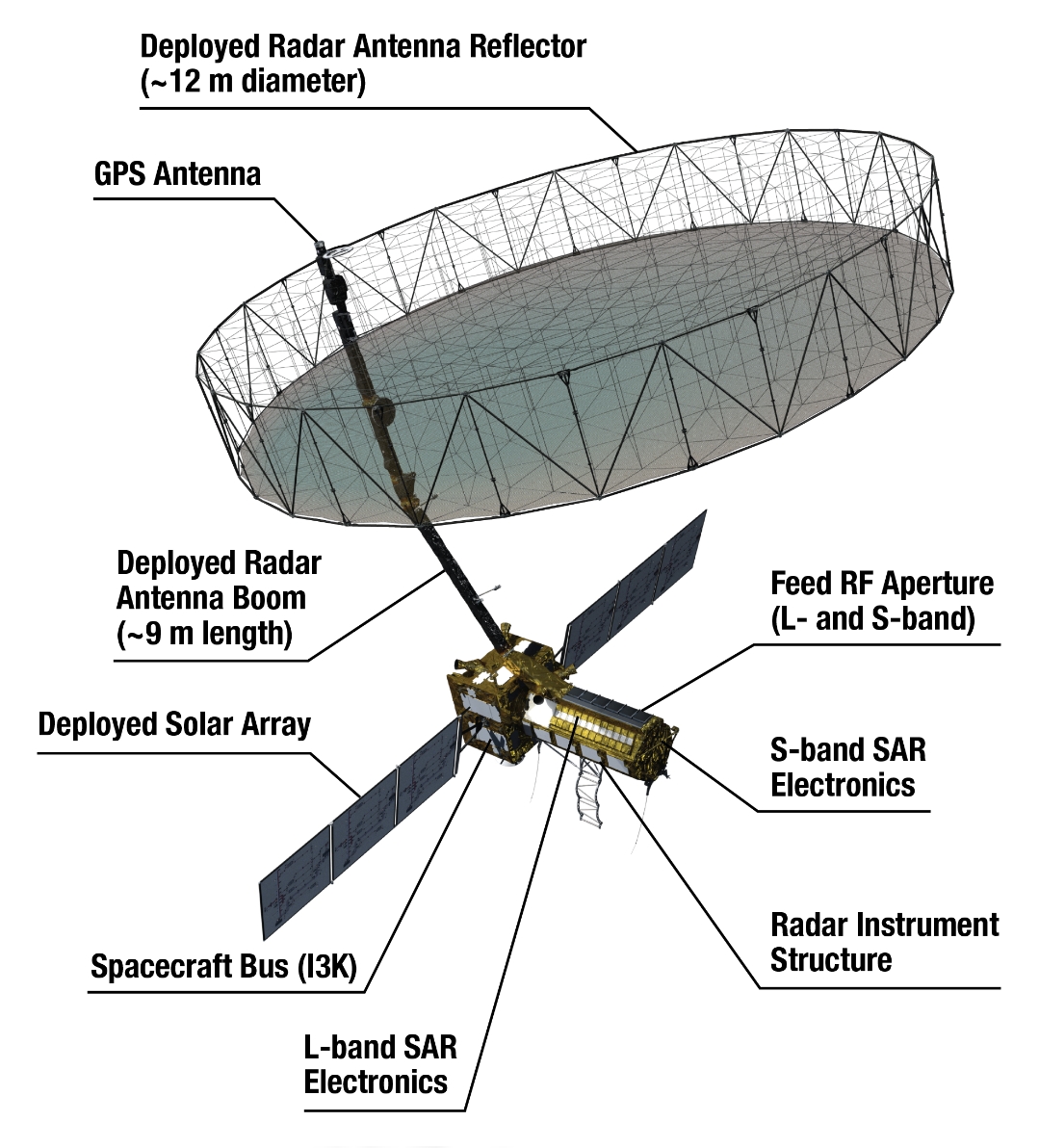
The NISAR satellite, short for NASA-ISRO Synthetic Aperture Radar, is an advanced Earth observation spacecraft equipped with L-band and S-band radar systems. Its design allows it to scan the Earth with unmatched detail, cutting through cloud cover and darkness alike. Unlike traditional satellites that rely on optical sensors, NISAR’s radar technology ensures consistent and reliable imaging every 12 days, even in challenging conditions. This makes it one of the most powerful tools for tracking changes in terrain, forest cover, glaciers, and coastal areas.
The Mission’s Objective and Vision
The key objective behind the NISAR satellite is to provide high-resolution, all-weather Earth imaging. The mission aims to support scientific research, improve natural disaster response, and offer vital data for sustainable development. Through this, the satellite will benefit not just scientists and policymakers but also communities at risk of environmental hazards. The mission showcases the spirit of collaboration, with NASA contributing the L-band radar and ISRO providing the S-band radar along with the launch vehicle and satellite bus.
Total Mission Cost of the NISAR Satellite
With a combined investment exceeding $1.5 billion, the NISAR satellite stands as the most expensive Earth observation radar mission ever built. India’s contribution to the project is around ₹788 crore, covering the satellite bus, launch operations, and S-band radar. The high cost reflects the cutting-edge technology and the potential long-term benefits of having real-time Earth monitoring capabilities. These funds are not just a spending measure but a strategic investment in global climate resilience and scientific leadership.
Why the NISAR Satellite is Vital for India
India will gain significant value from the NISAR satellite, especially in areas like agriculture monitoring, natural disaster preparedness, and groundwater management. The satellite will allow real-time observation of events such as floods, landslides, and crop changes. This can lead to quicker decision-making, better planning, and improved risk management. For a country so dependent on seasonal agriculture and prone to climate-related events, the satellite is a step toward better resource management and stronger national resilience.
Configuration of the NISAR Satellite Spacecraft
The spacecraft structure is based on ISRO’s I-3K satellite bus and weighs approximately 2,400 kilograms. It features a massive 12-meter deployable antenna, supported by a 9-meter boom. This configuration ensures wide radar coverage and precise data collection. Powered by a high-efficiency solar array generating 6.5 kilowatts, the satellite can transmit enormous amounts of data using high-speed onboard processors and data links. The onboard radar systems work seamlessly with navigation and control modules, ensuring accurate Earth mapping.
Building and Realizing the NISAR Satellite
The development of the NISAR satellite started in 2014 and took over a decade to complete. Both NASA and ISRO contributed technical teams to co-design the radar systems and satellite infrastructure. Despite facing challenges, including antenna overheating risks and post-pandemic delays, the teams overcame all hurdles. The final satellite assembly and testing took place in India, where the satellite passed multiple rounds of mechanical, thermal, and systems validation before being declared flight-ready.
Launch Details of the NISAR Satellite
The satellite is scheduled to launch on July 30, 2025, aboard India’s GSLV-F16 rocket from the Satish Dhawan Space Centre. The lift-off will insert NISAR into a Sun-synchronous orbit at around 747 kilometers altitude. This particular orbit allows the satellite to scan the same parts of Earth with consistent lighting conditions, enhancing the quality of time-series data.
Satellite Deployment After Launch
Once in orbit, the NISAR satellite will undergo a complex deployment process. The radar reflector and its boom will slowly unfold over several hours, ensuring that the radar antenna fully extends without damage. Engineers from NASA and ISRO have developed this system to handle the challenges of space deployment in a controlled and fail-safe manner.
Commissioning the NISAR Satellite
The commissioning phase will last approximately three months post-launch. During this period, all systems—including power, radar alignment, and data links—will be thoroughly checked. Engineers will calibrate the radar systems and test imaging capabilities before the satellite begins its full scientific operations. This phase is essential to ensure long-term stability and accuracy.
Benefits of the NISAR Satellite Mission
The NISAR satellite offers several long-lasting benefits. Its most valuable contribution will be in the early detection of changes in Earth’s surface, even those smaller than a centimeter. This will improve response times to natural disasters and environmental threats. In addition, it will help in monitoring forests, glaciers, coastlines, and agricultural regions. Data from NISAR will be made freely available, supporting scientific research and policymaking across the globe. The mission also reinforces India’s position as a key player in global space science, while deepening strategic ties with the United States.
Conclusion
The NISAR satellite marks a turning point in how we observe and understand our planet. By offering detailed, timely, and open-access Earth data, the mission will support global efforts to tackle climate change, protect ecosystems, and respond to disasters faster than ever before. As India and the United States prepare for the launch, the world watches with anticipation—because with NISAR, the Earth will no longer keep secrets.